
Transparent LCD Showcase vs Transparent LED: Selecting the Right Technology for Your Retail Showcase
Transparent LCD Showcase vs Transparent LED: Where the Two Technologies Differ
For transparent LCD vs transparent LED display shopping, the split comes down to use: transparent LCD suits close-view product showcases where a physical item stays visible behind the screen, while transparent LED suits large storefront and glass surfaces viewed from a distance. Both keep the background visible, but they solve different retail problems.
Teams comparing implementation options can also consult Outdoor LED Displays for Transit & Smart City Projects · Wintouch.
Transparent LCD panels show images on a clear substrate, letting viewers see products or content behind the screen even while it runs ([6]). Transparent LED displays arrange surface-mounted diodes on transparent strip grids, preserving sight lines across glass [7]. Each technology is the [1] — transparency is a project requirement, not just a visual effect.
Side-by-Side: Transparency, Brightness, Resolution, and Contrast
This transparent display technology comparison hinges on four numbers: transparency rate, pixel pitch, brightness in nits, and contrast under ambient light.
| Technology | Transparency | Light source | Brightness | Contrast | Image detail | Typical size |
|---|---|---|---|---|---|---|
| Transparent LCD | 8–15% | External high-brightness backlight (rear) | Average, needs external backlight | Good | Great at close range | 12”–86” |
| Transparent LED | 40–75% | Direct LED (self-emissive) | Very high, 1,000–5,000 cd/m² | Excellent | Okay up-close, pixelated | Scalable to infinite |
Transparent LCD depends on a rear backlight, typically mounted behind the panel, and transparency stays modest at around 8–15% ([2]). Transparent LED is self-emissive with brightness of 1,000–5,000 cd/m² and transparency of 40–75% depending on pixel pitch; its wider pixel pitch makes visuals appear pixelated up close, but panels scale across entire shopfronts ([2]). The trade-off is simple: smaller pixel pitch means finer close-view detail, which is why LCD leads at arm’s length and LED leads at distance.
When a Transparent LCD Showcase Is the Right Call
Choose a transparent LCD showcase for retail when the physical product itself is the hero and the screen overlays context. The item stays visible behind the panel while the display adds pricing, descriptions, video, or interactive content in a single two-layer view ([6]).
This works best for jewelry, cosmetics, electronics, museum cases, and OEM equipment shown close to viewers. LCD keeps text and icons sharp in a showcase cabinet where product visibility matters, and it integrates cleanly with a CMS or system-on-chip platform for content updates. Check the CMS/SoC integration checklist before committing, since enclosure lighting must be controlled or the transparent LCD image [7]. For a beverage cooler or luxury product cabinet, transparent LCD shows promotions while keeping the actual items visible ([5]).
When a Transparent LED Display Fits the Storefront
A transparent LED display for retail storefronts answers space-level and architectural needs: large glass facades, retail windows, atriums, and sheltered semi-outdoor areas where medium-to-long viewing distance rules.
Transparent LED Screen for Retail Windows
The high brightness — 1,000–5,000 nits — carries content across an atrium or storefront floor where a dimmer LCD would wash out. Its wider pixel pitch means up-close text is less sharp, so it suits big-image brand messages rather than fine product copy.
Brightness, Ambient Light, and Sun Exposure
Transparent LED screens perform best at moderate brightness in controlled interiors; running above 1,500–2,000 nits close up can cause visual fatigue, so the more meaningful spec is [3]. For glass walls and storefront windows they deliver strong ROI where light transmission matters most ([4]), but for fully exposed outdoor installations with direct sun, a traditional LED display remains the [3].
Selection Flow: How to Choose Between LCD and LED
Weighing transparent LCD vs LED vs OLED decisions case by case, run each project through this four-step flow.
- Is a physical product displayed behind the screen, close up? If yes, transparent LCD.
- Is it a large glass surface viewed from a distance? If yes, transparent LED.
- What ambient-light conditions and brightness do you need? LED for bright, large spaces; LCD for controlled interior lighting.
- What CMS/SoC integration path do you need? Choose the option whose content platform matches your updating workflow.
| Application | Recommendation | Rationale |
|---|---|---|
| Product showcase cabinet | Transparent LCD | Sharp close-view text, product stays visible |
| Beverage cooler door | Transparent LCD | Promotions over visible drinks |
| Retail storefront window | Transparent LED | Bright, distance viewing, two-layer effect |
| Atrium / glass facade | Transparent LED | Scalable, high brightness |
| Fully exposed outdoor sign | Traditional LED | Direct-sun exposure |
Frequently Asked Questions
Is transparent OLED better than transparent LCD? Transparent OLED offers superior optical clarity, wider viewing angles, and direct physical superposition because it requires no bulky backlight box, while transparent LCD needs an enclosed showcase with internal rear lighting ([7]). Choose OLED for premium luxury retail and exhibitions; choose LCD for cost-effective showcases.
Teams comparing implementation options can also consult Commercial Touchscreen Displays & Kiosks · Wintouch.
What is the difference between transparent LCD and transparent LED? The transparent LCD vs transparent LED display gap is engineering: LCD uses a rear backlight at 8–15% transparency, while LED is self-emissive at 40–75% transparency with far higher brightness ([2]). LCD wins on close-up detail; LED wins on size and brightness.
Can transparent digital signage be used outdoors? Only under sheltered conditions. Transparent LED works in atriums and covered semi-outdoor settings, but for fully exposed outdoor installations with direct sun exposure, traditional displays remain the appropriate choice ([3]). Direct-sun exposure is the deciding constraint.
When should I choose transparent LED over transparent LCD? Choose transparent LED when the project needs a larger transparent area, glass installation, or long-distance visual effect — typical for retail windows, glass walls, malls, and large commercial spaces ([5]). Choose LCD when close-view product detail and sharp overlays matter more.
Related guides
- Transparent LCD Showcase Buyer’s Guide for Retail Procurement
- Transparent LCD Showcase Interactive Content Layer: Deployment Scenarios That Add Value Without Overwhelming the Showcase
- Transparent LCD Showcase Cost Breakdown: Panel and Driver Board Cost Drivers
- Transparent LCD Showcase Ambient Light Specification Guide: Contrast Ratio, Reflectance & Viewing Angle
Content reviewed: 2026-08-10.
Evidence confidence
Confidence: Medium. This rating reflects cross-checking 7 sources across 6 independent domains. It measures evidence coverage, not certainty; verify safety-critical work against manufacturer instructions and local requirements.
References
APA 7th edition
- ↑Displayman. (n.d.). Transparent LED vs Transparent LCD. Retrieved August 10, 2026, from https://displayman.com/transparent-led-vs-transparent-lcd/.
- ↑Cited 3 timesCrystal Display. (n.d.). Transparent Displays Compared: LCD vs OLED vs LED. Retrieved August 10, 2026, from https://crystal-display.com/blog-transparent-displays-compared-lcd-vs-oled-vs-led/.
- ↑Cited 3 timesChipshow. (2026). Transparent LED Screens vs Traditional LED Displays. https://www.chipshow.com/transparent-vs-traditional-led-screen-guide/.
- ↑Vanguardled. (2024). Benefits of Transparent LED Screens for Retail Environments. https://vanguardled.com/blog/benefits-of-transparent-led-screens-for-retail-environments-enhancing-storefronts-and-interiors/.
- ↑Cited 2 timesDisplayman. (n.d.). Transparent Display vs Standard Display | DisplayMan. Retrieved August 10, 2026, from https://displayman.com/transparent-display-vs-standard-display.
- ↑Cited 2 timesEKAA TECHNOLOGY CO.,LTD. (n.d.). How Do Transparent LCD Showcase Work?. Retrieved August 10, 2026, from https://www.ekaa.net/how-do-transparent-lcd-showcase-work.html.
- ↑Cited 3 timesRcstarsgroup. (n.d.). Transparent Touch Screen Monitor & Transparent Digital Signage: A Complete B2B Buyer’s Guide – Rcstars Industrial. Retrieved August 10, 2026, from https://www.rcstarsgroup.com/blog/transparent-touch-screen-monitor-digital-signage.
You should also read:
Transparent LCD Showcase Cost Breakdown: Panel and Driver Board Cost Drivers
Direct answer: what actually drives transparent LCD showcase COGS A transparent LCD showcase is not one priced product. Its cost of goods sold (COGS) splits into two independent lines that scale on completely different forces, so the first step of any purchase is to stop…
Continue reading...Transparent LCD Showcase Interactive Content Layer: Deployment Scenarios That Add Value Without Overwhelming the Showcase
Transparent Lcd Showcase Interactive Content Layer is the decision framework examined in this guide. The sections below turn sourced evidence into practical comparison criteria without overstating what the available research can prove. A transparent LCD showcase becomes valuable only when the content layer on the…
Continue reading...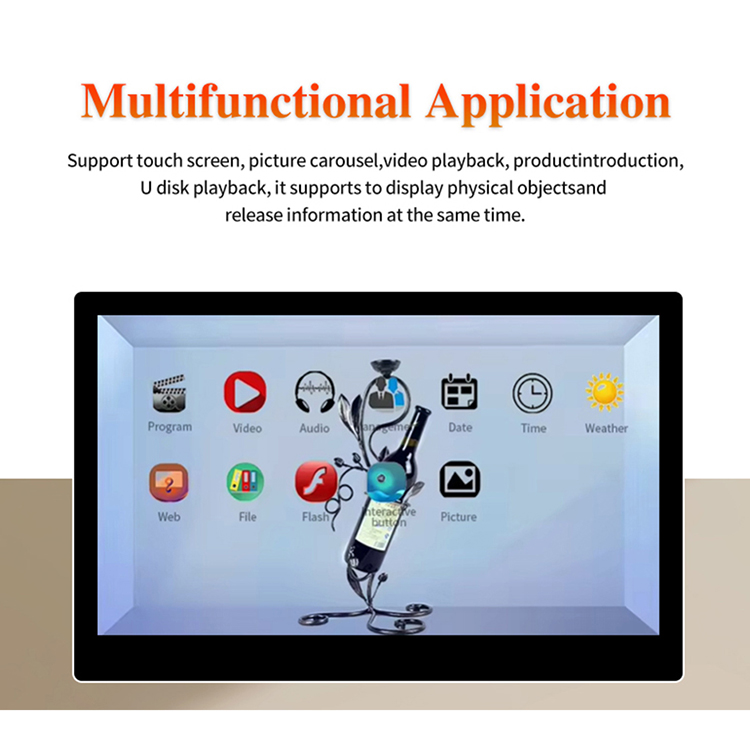
Transparent LCD Showcase Ambient Light Specification Guide: Contrast Ratio, Reflectance & Viewing Angle
A transparent LCD showcase has to stay see-through while competing with storefront illumination — that tension, not the panel’s datasheet, decides whether your content is readable. Because a transparent LCD panel does not emit light on its own, it relies on a backlight and controlled…
Continue reading...